Painting "Squall in the East"
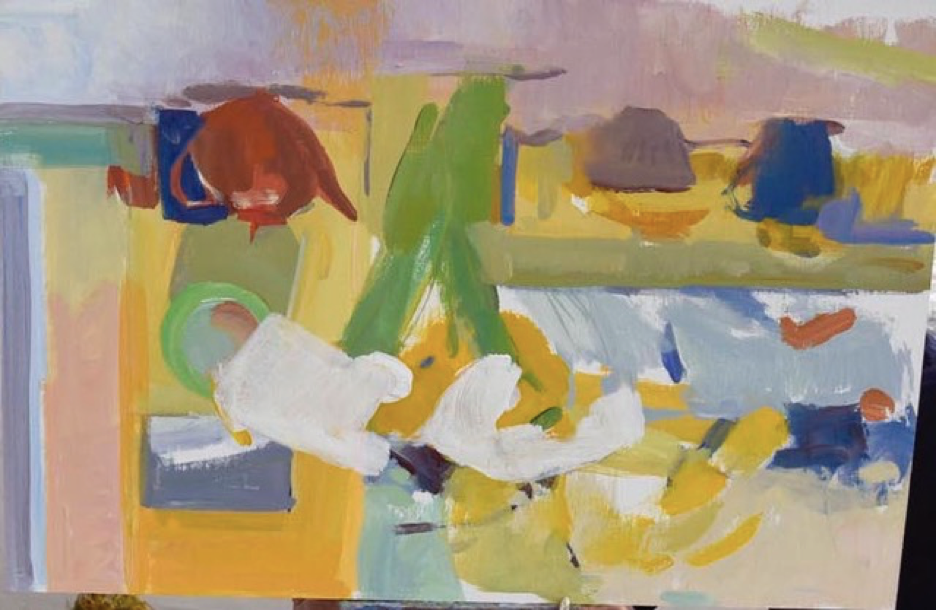
This is a canvas on which I’d begun painting a still life of sunflowers. The flowers died after the first brief session, but this canvas was too good to waste so I decided to paint over it.
I turned it upside down to avoid thinking about what the colors represented.
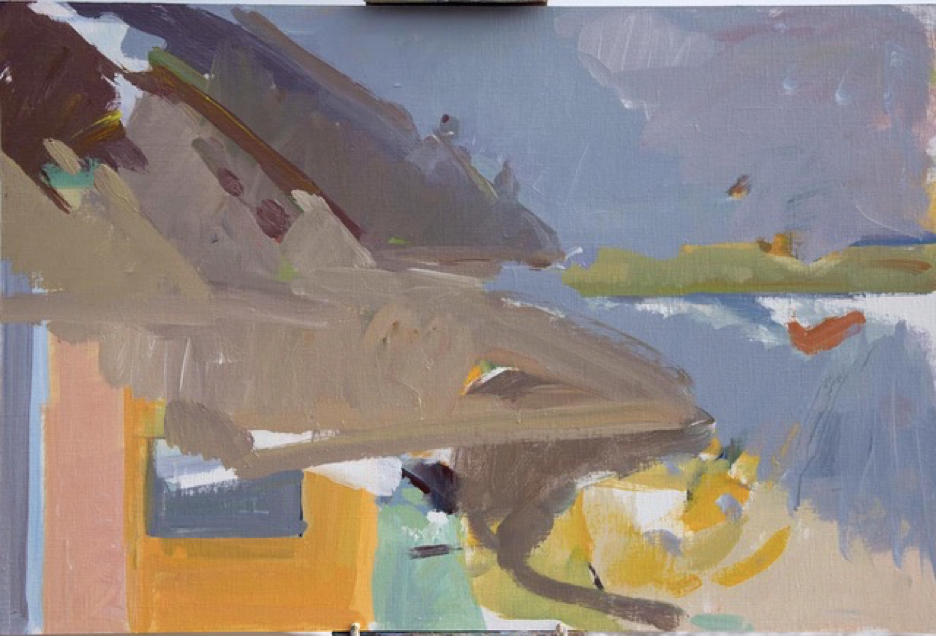
Painting on location, I placed the horizon above the light patch in the underpainting. After roughing in the sky and water, what's left of the old painting is temporarily standing in for the beach. Then I roughed in some of the foreground, the left of the painting, and roughly delineated trees on the distant cliff.
Now more than half the canvas is covered, though crudely.
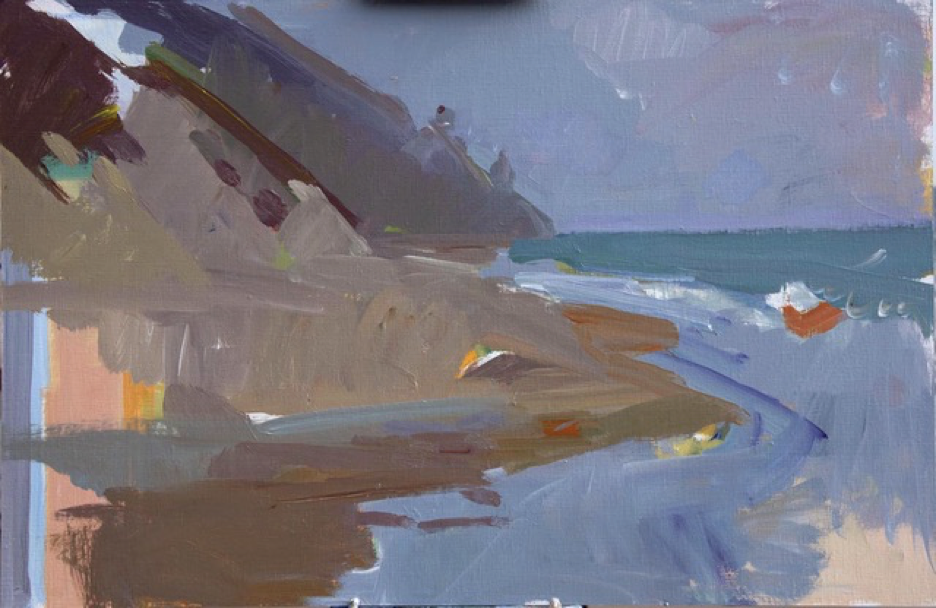
I made a first try at defining the freshwater outflow, and began to indicate reflections of the near cliff, leaving patches of the original gold on the left side of the canvas.
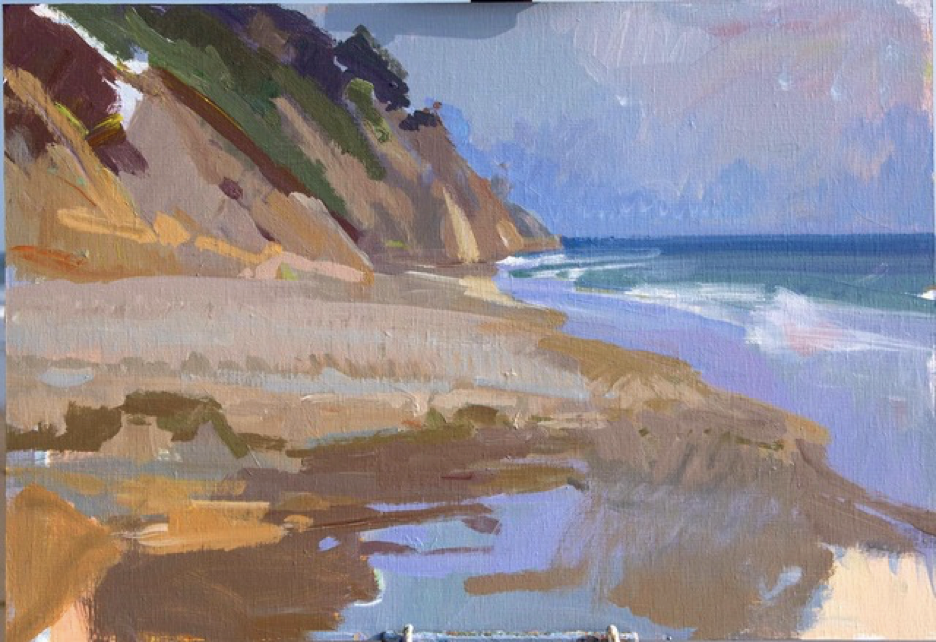
Giving more attention to the farthest cliff, I painted a darker line of ocean in the distance, and some waves coming in nearby, finally covering the rubber ducky left by the underpainting.
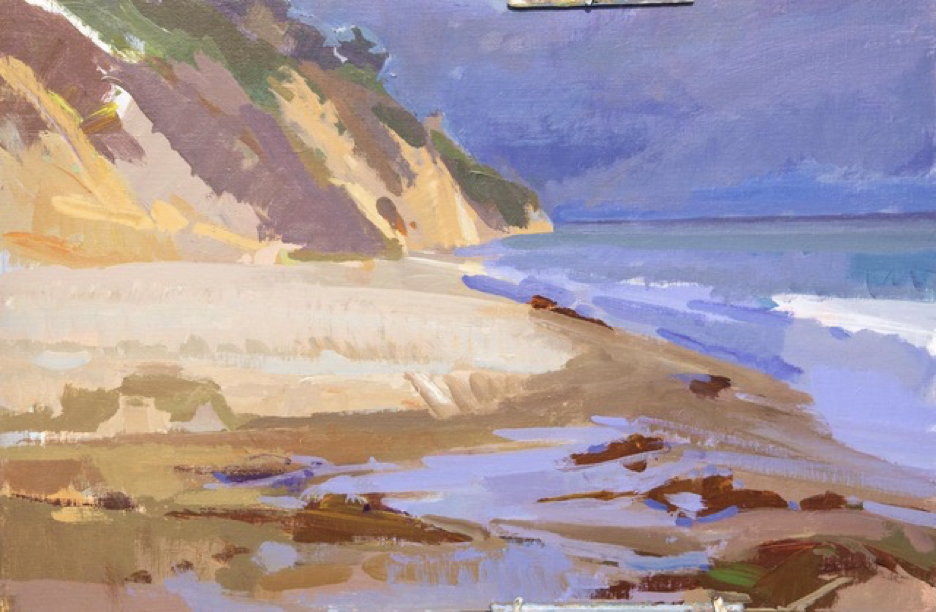
I repeatedly painted the wedge of ocean and waves as they came to shore, then tried to more accurately depict the distant trees on top of the cliffs.
I painted negative shapes around those trees, giving them a more defined shape. This process continued back and forth, positive to negative, until I was satisfied.
Starting to deal with the foreground, I let the brush do a kind of thoughtless kelp calligraphy, attempting to show movement of the kelp in the freshwater outflow.
More mud in the foreground, then continuing to re-see the sand and muddy flowing water, making a few more adjustments in the foreground and a couple more changes in the wet sand.
I established more planes and values in the distant cliff—as the painting progressed I repainted all parts of the cliff many times over. Every time I had to make a change in that long cliff, I needed to take time to decide exactly where I was looking and what I wanted to include.
I saw more hints of a storm in the distance, so started darkening the sky and distant ocean.
One of the marvelous things about not planning is not knowing what nature has in store. When I began, the day was lightly overcast. Little by little the sky cleared and the sun shone brightly where I stood while the squall formed in the east, darkening the distant sky.
I turned my attention to the cliffs, adding a big patch of grayish mauve; I initially placed it to form a connection to the edge of the sand against the water. Later, I modified that patch by inserting openings to the lighter sandstone.
As the sun lowered behind me, it warmed and brightened the cliffs, but its low angle made the sand of the beach and the incoming water grayer.
Getting tired, I scumbled color over a large part of the nearest cliff without carefully looking. At least I was satisfied with the sky, the ocean, and the roughly painted yet suggestive freshwater in the foreground.
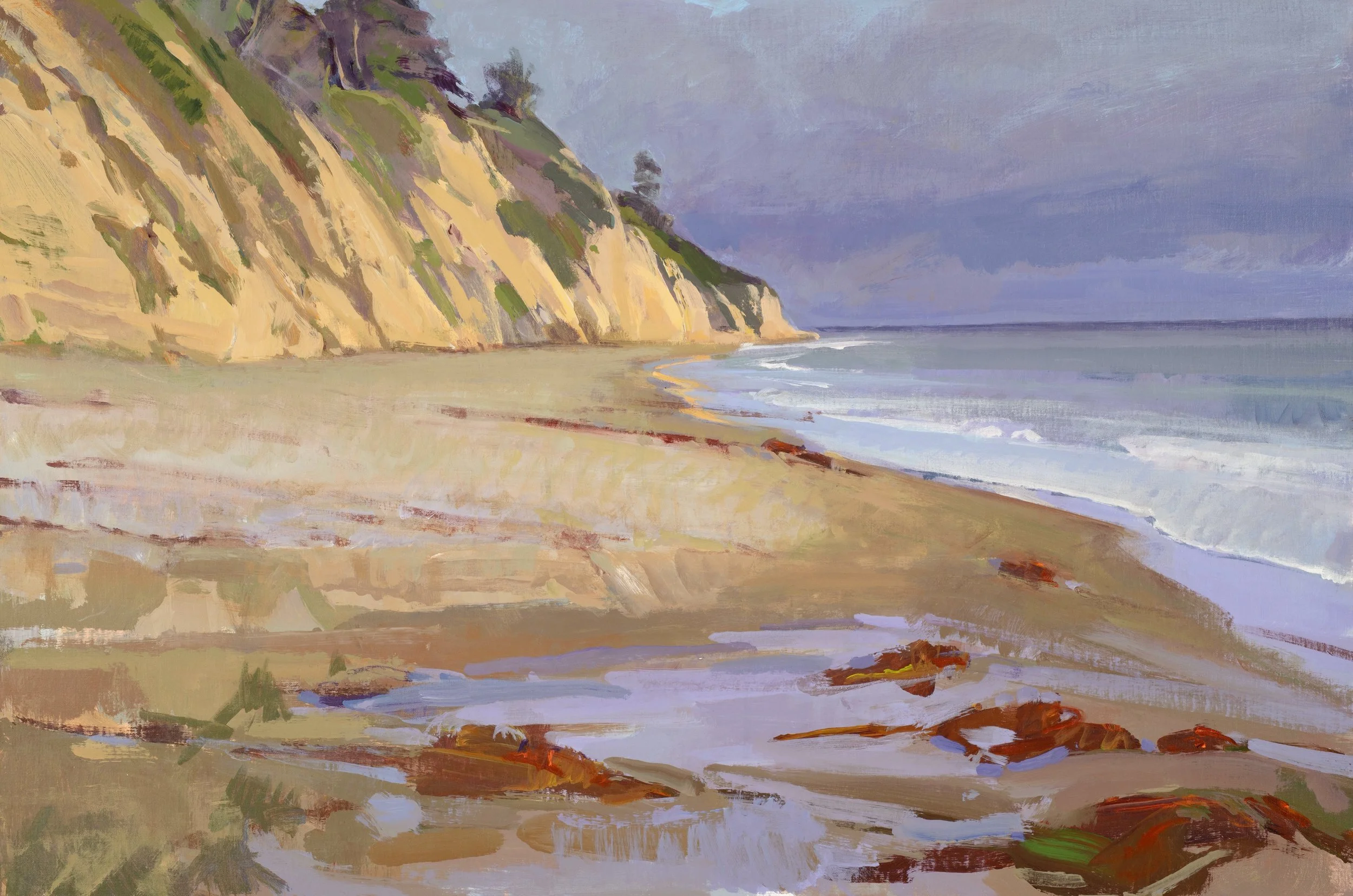
After looking at the painting in the studio for a couple of weeks, I more carefully established shapes of trees and vegetation on the cliffs.
In my effort to be accurate, I had obscured some of the warmth and strength in the near cliff and top of the sand, so repainted and simplified those areas.
— Marcia Burtt
All photos by Bill Dewey